Samsung Maestros Academy – The Future of Made in Italy with Samsung and Leo Burnett
Posted: May 26, 2014 Filed under: Ambient, Case History, Design, Digital, Event, Installation, Italy | Tags: Leo Burnett, Made in Italy, Milan, samsung, Samsung Maestros Academy, Smart Bike Leave a commentItalian craftsmanship has long been considered a renowned art form. Now, in a time when younger generations are gravitating to smartphones rather than toolboxes, expertise is only reminiscent of a bygone era. With the help of Leo Burnett Milan, Samsung created the first-ever digital conservatory called Maestros Academy to foster the next generation of Italian artisans in order to preserve “Made In Italy” excellences.
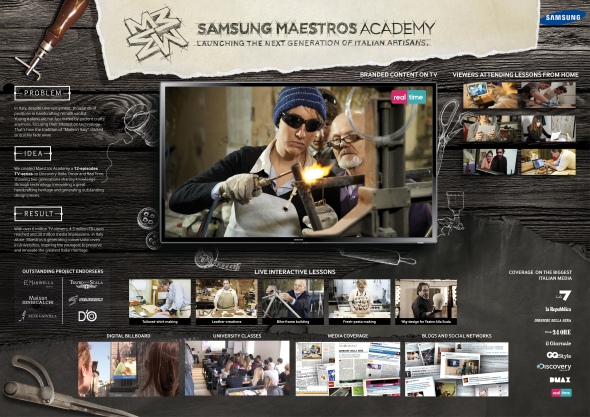
To bring to life the Samsung strategic role of “enabler” in people’s life, we looked at the current social situation in Italy: the disappearance of great handcrafting excellences which once brought Italy to greatness. At the same time, unemployment rate among young people is dramatically growing and younger generations are yearning for new opportunities to discover and express their potential and talent. Our idea aims to deal with this Italian paradox, reconnecting two generations, preserving the future of “Made in Italy” and fostering a new generation of Italian artisans. We want to demonstrate the great results that people and technology can achieve together.
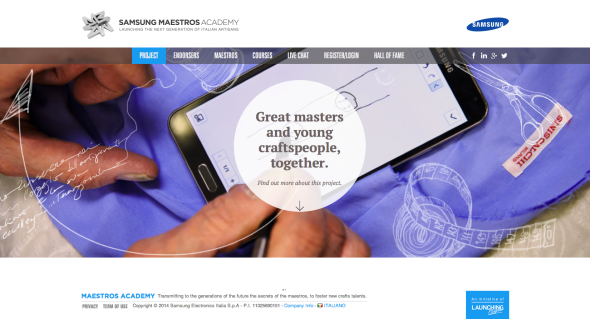
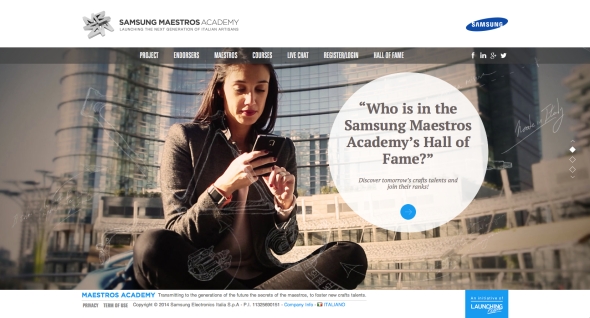
For this reason we created Samsung Maestros Academy: the first digital and integrated platform where young talents can learn the secrets of “Made in Italy” masters, through every kind of smart-device, inspiring the youngest to preserve and innovate the greatest Italian heritage.
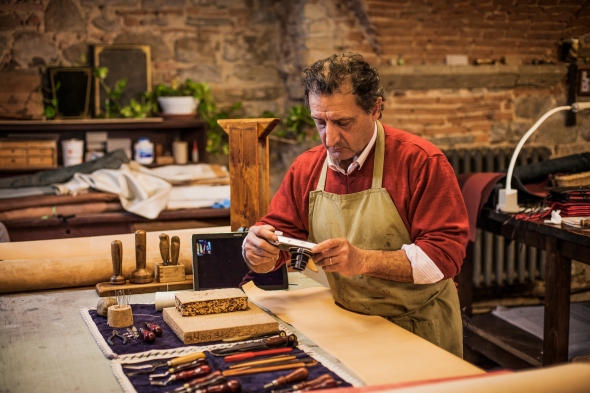
The idea of Samsung Maestros Academy was spread on digital channels (FB, Italian newspapers’ and lifestyle magazines websites, Confartigianato’s channels, LinkedIn, Twitter) to join the primary target of the initiative, digital natives, and drive them to the main platform, accessible from every consumer’s electronic device, such as smartphone, tablets, laptops and Smart-TV. The engagement platform consist in more than 40 video-lessons, full of invaluable ancient secrets, in-depth materials and live-interactive lessons, featured even on outdoor and digital-billboards in the major Italian squares, such as Duomo Square in Milan. A technology-enabled connection between two generations, that inspired Discovery Italia channels to produce a 12 episodes TV-series, telling our students’ best success, spread even thanks to Online and mobile TV channels platforms (Realtime.it, DMax.it, Discovery Italia digital platform). The project gained spontaneous echo on national newspapers, magazine and Tv-programs (Piazza Pulita) generating conversation even in the major Italian University.
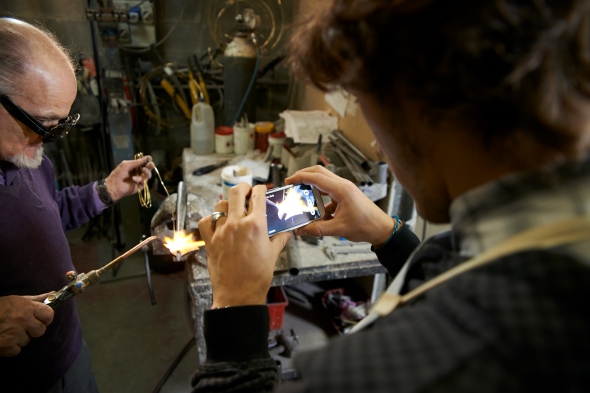
Samsung Maestros Academy generated a great conversation on newspapers, social media and TV-programs, with more than 6 million TV-viewers, 1 million Youtube-views in few days, 4.5 million FB-users reached and 30 million media impressions -in Italy alone- becoming a big topic even in universities including “Università commerciale Luigi Bocconi”, “Università Cattolica del Sacro Cuore” in Milan, IED, “Università degli studi di Roma Tor Vergata” and even by Fashion Institute of Technology in New York.Thanks to an extensive network of touchpoints people learnt ancient crafts through every smart-device,empowering consumer-awareness on product-features and brand reputation.
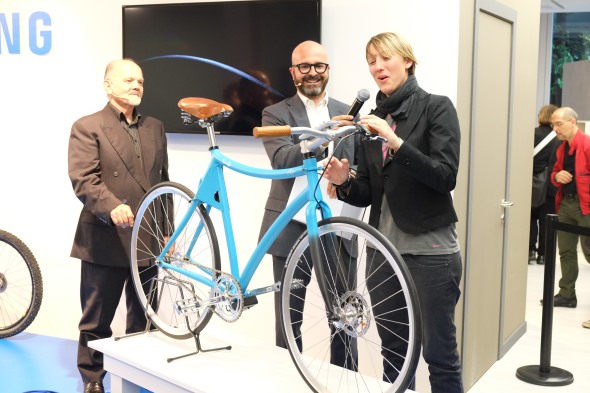
During interactive-lessons, users asked very specific questions, proving a remarkable high user-engagement. Almost the 50% of live-lessons participants asked the Maestros to become an apprentice, exceeding the available positions by 300% on average. Maestros’ students produced with great success innovative design-items, inspiring even more young talents to preserve and innovate the greatest Italian heritage. After Maestro Pelizzoli’s course, Alice created a truly innovative bike, showcased with great success during the Milan Design Week event. Marina together with Maestro Siniscalchi tailored a shirt, featured on an important Italian newspaper, triggering even the curiosity of GQ. Anna and Valerio crafted a bag, immediately displayed by the prestigious “Flow” shop in Florence.The results achieved by many other students generated over 30 million media-impressions and reaching 4.5 million FB-users, on Italian market alone.

After few months, a student with her Maestro created Samsung Smart-Bike, the first safe-bicycle that protects the rider with its built-in smart-components, automatically activated through a Samsung smartphone. A responsive “safety-environment” that detects ambient-conditions and protects the driver in real-time. A concrete solution for the problem of bikes being the most “unsafe” way of moving in Italy and a real help to break the young people’s barrier with using appropriate safety-equipment.
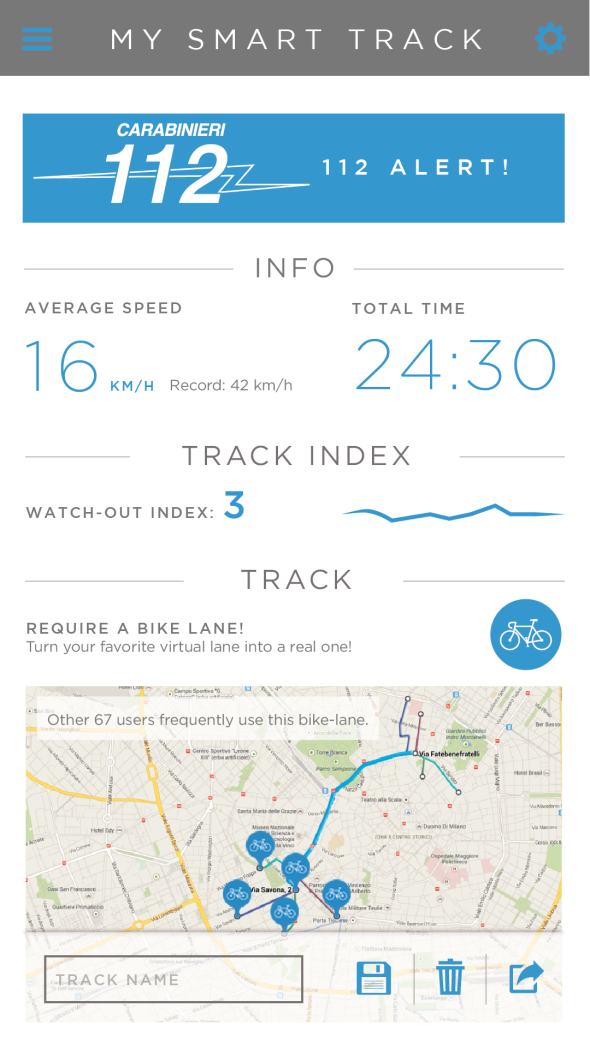
The idea was to control a fixed-bike and its built-in smart components with a Samsung smartphone and a dedicated app, allowing the automatic control of four laser-beams, a safety-camera a GPS-tracking system, offering innovative safety-features. The first engineered bike and its paired app were presented to one of the greatest design fairs in the world: the Milan Design Week, with the endorsement of EXPO2015 representative of Urban Mobility capturing the interest of important journalists. Alice’s idea has been taken under consideration for applications according to EXPO scenarios, after being recognized as a big step-forward for urban-safety and sustainability.

Advertising Agency: Leo Burnett Italy
Executive Creative Directors: Francesco Bozza, Alessandro Antonini
Creative Director: Christopher Jones, Anna Meneguzzo, Cristiano Tonnarelli
Digital Creative Director: Paolo Boccardi
Copywriter: Alice Jasmine Crippa
Art Director: Alessia Casini, Gianluca Ignazzi
Creative Team: Cristina Bissanti, Felipe Iglesias, Alberto Lot, Lia Paganini
Project Manager: Andrea Castiglioni, Francesco Loprete
Producer: Riccardo Biancorosso, Gaia Fusaro
Art Buyer: Giada Cioffi
PR Coordinator: Maria Teresa Genovese
Managing Director: Niccolo Arletti
Brand Leader: Elena Korzhenevich
Account Supervisor: Luca Ruspini
Account Manager: Federica Giacomotti
Technical Director: Gianluca Mori
Production House: Magnolia
Leo Burnett Italy for WWF: Pets4Pets Project – Advertising thought by kids to get adults thinking
Posted: December 16, 2013 Filed under: Agency, Case History, Digital, Italy, Low Budget, Press/Outdoor, Social, TV/Film | Tags: advertising, advertising thought by kids, bear, Leo Burnett, Pets4Pets Project, TV/Film, WWF Leave a commentWhat about asking youngsters, instead of experienced creative directors, to create the strongest communication campaigns?
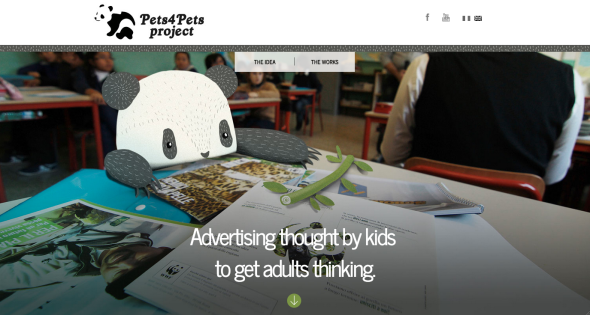
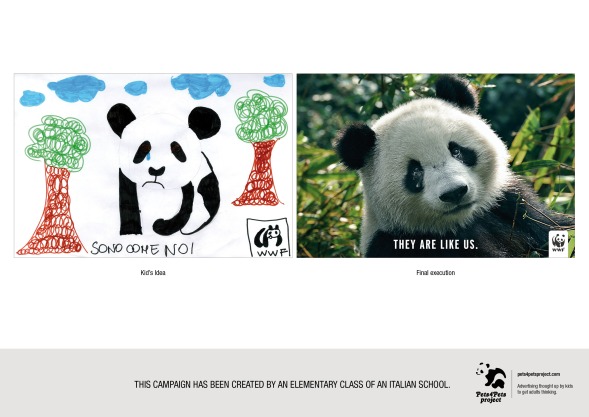
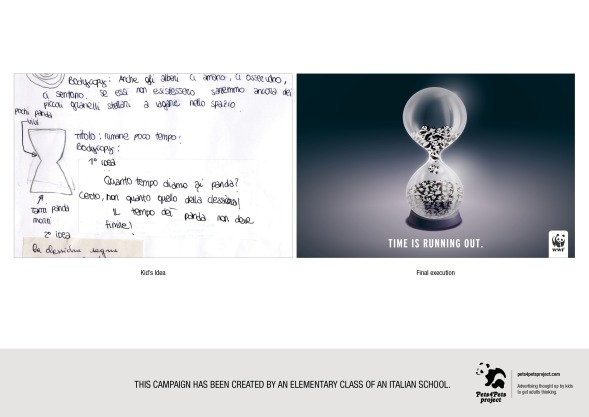
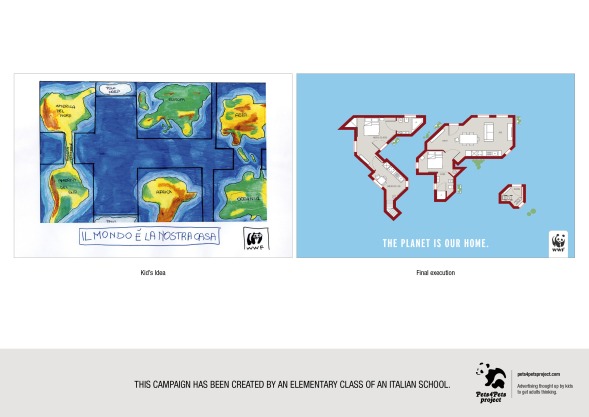
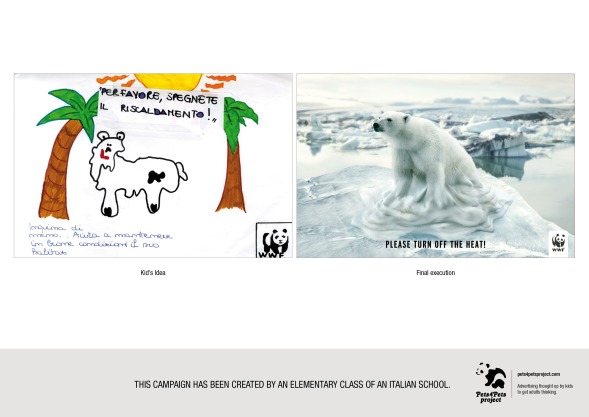
Pets4Pets Project taught little kids the secrets of the advertising industry; inviting them to imagine new social campaigns to help protect the animals they love the most. WWF, together with a team of creatives, photographers, illustrators, film directors, animators, post-producers and speakers helped students at an elementary school experience the whole creative process: from the brief, to the Pre Production Meeting, to the shooting, to going on-air. The result? Well see for yourself in the case video.

The adventure starts in the classroom, then moves inside the creative agency and finally arrives on a production set. For all the experienced creatives there’s just one strict rule: “never ‘contaminate’ the kids’ ideas”, just offer them the production advice they lack. First Challenge: a print campaign.

Second Challenge: a TV commercial.
The results
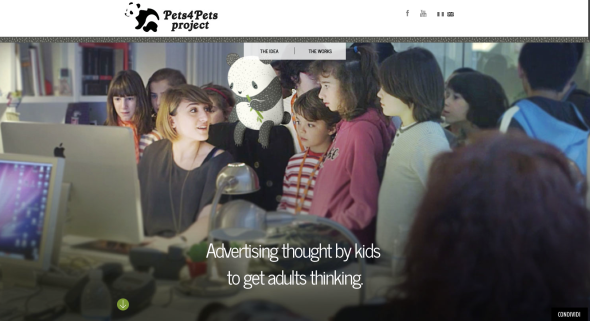
“From the first sketch on a piece of paper, to 2 TV commercials, 4 radio announcements and 8 print campaigns, ready to go on-air”. For every creative piece, you can see the “before” and “after”: from the kids’ original sketches to the final executions ready to go on-air. One thing is immediately evident: the kids’ work is already 100% creatively effective.
The team of professionals just helped them “translate” their ideas into a language that adults can understand.
Advertising Agency: Leo Burnett Italy
Executive Creative Director: Francesco Bozza
Associate Creative Director: Andrea Marzagalli
Creative Team: Andrea Stanich, Sergio Spaccavento, Paolo Boccardi, Alice Crippa, Serena Micieli, Silvia Savoia
Executive Producer: Debora Magnavacca
Year: 2013
Advertising by Design (22 Brilliant Ideas)
Posted: July 15, 2013 Filed under: Ambient, Art, Awards, Cannes Lions, Case History, Design, Direct, France, Germany, Graphic Design, Installation | Tags: 22 brilliant ideas, advertising by design, Brazil, Cannes Lions, Case History, Coca-Cola, design, FIAT, Germany, Heineken, Jung von Matt, kit kat, Land Rover, Ogilvy, Red Bull 1 CommentTBWA/Hunt/Lascaris – We Sent Their Briefs Back


Although TBWA\Hunt\Lascaris is well established as an above-the-line agency, our clients were yet to be introduced to the wealth of talent that TBWA\ Design has to offer. So, to get our clients’ attention, we intercepted existing above-the-line briefs and used the physical advertising brief as our canvas. Instead of answering the brief in a traditional manner, we conceptualized various designs that captured the essence of the brands, then brought them to life using only the cardboard job bags and the briefs that were attached to them. We created intricate pieces of paper art, transforming our client’s briefs into multi-dimensional design pieces. We then sent our clients’ briefs back to them, proving that TBWA\ Design can do amazing things with their briefs. Our campaign was a huge success. The design studio received their first new brief from our client just 5 days later. Even more notably, new design work in the system rose by 450% within the first 6 weeks.
Advertising Agency: TBWA\Hunt\Lascaris, Johannesburg
Executive Creative Directors: Matthew Brink, Adam Livesey
Art Director: Jade Manning
Copywriter: Vincent Osmond
Creative Director: Sacha Traest, Mike Groenewald
Design: Sacha Traest, Leigh-anne Salonika, Katleho Mofolo, Graeme Van Jaarsveld, Ilze Venter, jason Fieldgate
Typographer: Hazel Buchan
Photographer: Graeme Borchers, Des Ellis
Year: 2013
——————————————————————————————————————————————————————————————————————————-
Coca-Cola – Sharing Can


Advertising Agency: Ogilvy & Mather, Paris/Ogilvy & Mather, Singapore
Chief Creative Officer: Chris Garbutt, Eugene Cheong,
Creative Director: David Raichman, Frederic Levron, Yvan Hiot
Copywriter: Xiao An Cheng
Designer: Martin Olivier, Olivier Brechon
Technical Partner : Capital Innovation
Year: 2013
——————————————————————————————————————————————————————————————————————————-
Land Rover – The Escape Key

Jaguar Land Rover MENA is promoting the Land Rover LR4 with “The Land Rover Escape Key”, a small icon designed to replace the ESC key on desktop computer. Sent out in three batches of 800 pieces, the keys are designed to remind people at the office that there’s way to escape the every day routine of indoor business. Test driving a Land Rover LR4 is the way to find life beyond the office cubicle. The number of queries almost tripled and test drives are up by 208%.
Advertising Agency: Y&R MENA
Chief Creative Officer: Shahir Zag
Creative Director: Joseph Bihag, William Mathovani
Year: 2013
——————————————————————————————————————————————————————————————————————————-
Kit Kat – The Pillow Book

Advertising Agency: JWT, Sao Paulo, Brazil
CCO: Ricardo John
Art Director: Brunno Cortez
Copywriter: Erick Mendonça
Creative Director: Ricardo John
Year: 2013
——————————————————————————————————————————————————————————————————————————-
Marionnaud – Memory Game

Marionnaud, one of Europe’s largest perfume retailers, celebrated “10 years’ expertise in fragrance”. For the jubilee we created a very special staff incentive: the first Memory game without pictures. The cards had been finished with a fragrance coating. When rubbed, the cards released the scent of ingredients used in perfume manufacture. Rub and sniff: that was the only way to identify the pairs – but no problem for Marionnaud professionals.
Advertising Agency: Wirz/BBDO, Zurich
Executive Creative Director: Philipp Skrabal
Art Director: Barbara Hartmann
Copywriter: Marietta Mügge
——————————————————————————————————————————————————————————————————————————-
FIAT – Hero Hug

Advertising Agency: Leo Burnett, São Paulo
Chief Creative Officer: Marcelo Reis
Executive Creative Director: Guilherme Jahara
Creative Director: Rodrigo Jatene
Copywriter: Caio Lekecinskas
Art Director: Rafa Oliveira
——————————————————————————————————————————————————————————————————————————-
Domino’s Pizza – Domino’s Pizza Disc

Advertising Agency: Artplan, Sao Paulo
Executive Creative Director: Roberto Vilhena
Creative Director: Rodrigo Moraes
Copywriter: Tiago Trindade, Rodrigo Sanches
Art Director: Diogo Barbosa, Guilherme Grotti
Graphic Production: Bruno Werner
——————————————————————————————————————————————————————————————————————————-
Megaman – Light Bulb Calendar

Advertising Agency: Grabarz und Partner, Germany
Executive Creative Director: Ralf Heuel
Creative Director: Andre Price, Jan-Florian Ege
Art Director: Andre Price, Jana Mehrgardt, Jan Riggert
Designer: Sönke Jansen
——————————————————————————————————————————————————————————————————————————-
Heineken – First Interactive Bottle


Heineken embraces the start-up culture of experimentation because it knows that invention never sleeps. The brand understands that the best ‘user experiences’ tap into existing consumer behaviors and push technology into the background.
The intent of the Heineken Ignite project was to develop an idea that would create a memorable Heineken experience unlocking the power and possibilities of mobile innovation and technology.
Heineken believes that mobile innovation could offer a much more rewarding experience than just an app and embraced the challenge to think about how the product could be leveraged as an interface to the brand experience.
A prototype of Heineken Ignite will be revealed on 9 April at Milan Design Week as part of Heineken’s Lounge of the Future concept. Heineken takes its promise to “open your world” even further with the Heineken Ignite project, enhancing the organic way in which the product is used based on social interaction between beer drinkers. This innovative approach lets people be a part of the party in a whole new way and opens up possibilities in social situations.
Advertising Agency: Tribal DDB, Amsterdam
——————————————————————————————————————————————————————————————————————————-
3M Earplugs – Volume Pack

The task was to develop an original promotional packaging solution that immediately conveyed the product value of 3M’s Solar Earplugs – a product targeted at end users frequently requiring effective noise protection (such as musicians and festival-goers). Solution: 3M turned the purpose of the earplugs – to reduce noise – into an original package design. The container’s cap looks like the volume knob of a hi-fi system; when opening it to reach the earplugs, one seems to be turning down the volume.
Advertising Agency: Scholz & Friends, Germany
Chief Creative Officer: Martin Pross
Executive Creative Director: Matthias Spaetgens
Creative Direction: Robert Krause, Wolf Schneider
Copy: Nils Tscharnke
Art Direction: Sebastian Frese, Ralf Schroeder
——————————————————————————————————————————————————————————————————————————-
Deutsche Bank – Anamorphic Mirror


Brief Explanation
The vestibule is a narrow room of 25sqm strongly limiting the possible size of the installation. Therefore, we decided to utilise light for a radiant impact, and to expand the process of reception by making use of the visitors’ movement while approaching the area via a short staircase. Going upstairs becomes part of the experience as visitors gain increasing insights to the entry with the installation. Its concept is based on the principle of anamorphosis: what you see alters as you change your position in space. The image only fully resolves itself when seen from a particular ‘sweet spot’.
Describe the brief from the client
The redesigned corporate headquarters of Deutsche Bank in Frankfurt am Main are now housing a brand and conference area. Parts of this section are public and can be accessed directly from the spacious atrium via a staircase. Deutsche Bank commissioned us to develop an installation that references the well-known company logo, originally designed by Anton Stankowski, for the vestibule of this area. The brief was to provide an atmospheric element that would be visible to customers, visitors and employees standing at reception, as well as on the bridge connecting the building’s 2 towers.
Description of how you arrived at the final design
‘Anamorphic Mirror’ consists of a faceted mirror and blue light projected onto the opposite wall. When viewed from the ‘sweet spot’ the mirror reflects the Bank’s logo. Standing at the bottom of the stairs, visitors see seemingly random blue reflections on the mirror’s facets. As they get closer, the blue reflections begin to take shape, until they resolve into the bank’s logo upon the visitors’ reaching the stairs’ top. In this manner, an animation is created from a static surface. While getting even closer to entering the conference area, visitors are themselves reflected in the mirror and thus take centre stage.
Indication of how successful the outcome was in the market:
Since the opening on April 6 more than 20,000 visitors came to see the public part of the brand area. Board members use the overall facilities to hold receptions, functions such as HR are using it for employee activities, bank managers invite partners and clients, the press department welcomes journalists. With unobtrusive means, the dynamic and yet poetic installation ‘Anamorphic Mirror’ creates an atmospheric element with space-encompassing impact, and attunes visitors to the brand from the very beginning.
Advertising Agency: ART+COM in Cooperation with COORDINATION, Berlin
Executive Creative Director: Joachim Sauter
Designer: Simon Häcker
Project Manager: Gert Monath
Senior Art Director: Eva Offenberg
Year: 2013
——————————————————————————————————————————————————————————————————————————-
The Hälssen & Lyon – The Tea Calendar


The Hälssen & Lyon tea calendar is the first calendar in the world to feature calendar days made from tea leaves. Finely flavoured and pressed until wafer-thin, the 365 calendar days can be individually detached and brewed directly in the cup with hot water. The tea calendar was sent exclusively to selected business partners.
Advertising Agency: Kolle Rebbe, Hamburg
Executive Creative Director: Sascha Hanke
Creative Director: Heiko Schmidt and Kay Eichner
Creative: Patrick Schroeder, Julia Meissner
Year: 2013
Gold Lion
——————————————————————————————————————————————————————————————————————————-
Hot Wheels – Don’t Drink and Drive Key Chains

Advertising Agency: Ogilvy, Mumbai, India
National Creative Directors: Abhijit Avasthi, Rajiv Rao
Senior Creative Director: Amitabh Agnihotri, Sameer Sojwal
Creative Group Head: Yogesh Pradhan
Year: 2012
——————————————————————————————————————————————————————————————————————————-
Greenpeace – Do Not Disturb

Advertising Agency: AlmapBBDO, São Paulo, Brazil
Chief Creative Officer: Marcello Serpa
Executive Creative Director: Marcello Serpa
Creative Director: Luiz Sanches
Art Director: Caio Tezoto
Year: 2012
——————————————————————————————————————————————————————————————————————————-
Coca-Cola FM – Magazine Amplifier


The piece consists in an exclusive insert for subscribers of the latest edition of the Capricho magazine which was created by JWT. Attached to the cover, the art allows readers to turn the magazine into an amplifier. Simply by rolling the magazine and inserting the iPhone tuned into the Coca-Cola FM application in the spot indicated. The final format allows the sound waves to travel in two different directions at the same time, intensifying the stereo effect created by the device. The next step is to enjoy the music.
Advertising Agency: JWT, Brazil
Year: 2012
——————————————————————————————————————————————————————————————————————————-
Red Bull – Portable Charger

We created Redbull-shaped portable charger. This Redbull-shaped charger will show its own recharging screen when they fit into the gadget And the mobile webpage of Redbull will be on the screen when it is unlocked.
Advertising Agency: Hallym University, Cheonan-si, South Korea
Copywriter: Heejo Sun, Dongkyun Yu
Art Director: Minseok Go
Year: 2012
——————————————————————————————————————————————————————————————————————————-
Land Rover – Edible Survival Guide

While Land Rover vehicles can take on any obstacles in the desert, it cannot be said the same of their owners. Scorching temperatures, deadly animals and sinkholes are just a few things they might encounter. And when they venture deep into it, even the most experienced drivers can quickly succumb to the harshness of the desert. We wanted to create something that would cut through the clutter and that these people would like to keep. So we created a survival guide, which explained the basics for staying alive in the Arabian Desert, and packaged it in a way that would spur the attention of our target audience.
We researched every indigenous animal and plant, people could encounter in the Arabian Desert and how they could be used to survive. We studied the topography of the region to guide people to safety. We used a reflective packaging similar to army rations, which could be used to signal for help, and bound the book with a metal spiral, which could be used for cooking. Finally, we even took an extra step so that in case of emergency, people could always EAT the book. It was made out of edible ink and paper, and it had a nutritional value close to that of a cheeseburger.
We sent the book to 5,000 existing customers, gave it away as a supplement to the cars’ manual and made it freely available in sports shops. The initial response was very positive. And the client was so happy with the concept that they asked us to include the book as an insert in the next edition of a car magazine, with a 70,000 circulation.
Advertising Agency: Y&R, Dubai, UAE
Chief Creative Officer: Shahir Zag
Creative Director/Copywriter: Shahir Zag
Creative Director/Art Director/Illustrator: Joseph Bihag
Copywriter: Guillaume Calmelet
Designer/Copywriter: Khaled Said
Year: 2012
——————————————————————————————————————————————————————————————————————————-
IBM – Outdoor as Utility


Advertising Agency: Ogilvy France
——————————————————————————————————————————————————————————————————————————-
Ricola – Ricola Music Edition


Ricola, a brand of cough drops and breath mints in Switzerland, is known for its traditional blend of thirteen natural herbs. The provision of instant relief, even to the most strained throats, is visualised with the help of the wrapping paper. The Music Edition, an illustrated release, turns the drops into the heads of suffering singers. Each and every throat appears to be constricted. However, when you unwrap a bonbon, the throat is relieved and all hoarseness disappears. Print advertising presented the five characters: Rockabilly, Pop star, Opera singer, Rapper and Punk Rocker, with the tag line, “Unwrap your voice”. The project won Gold for Package Design at the London International Awards this week.
Advertising Agency: Jung von Matt, Hamburg
——————————————————————————————————————————————————————————————————————————-
Camp Nectar – Fruit Boxes (Made from Real Fruit)


General Brands in Brazil ran a two-year experimental campaign in which fruit was grown in the shape of Camp Nectar fruit boxes to promote the claim, “Made from Real Fruit”. Customized juice box molds were placed around growing fruit on an orchard in Paranapanema, producing 1,123 oranges, lemons, guavas and passion fruit with the Camp Nectar box shape. The specially designed fruit, complete with brand imprint, straw and carton flaps, were placed in supermarkets and fairs to promote the juice range. The campaign won a Gold Outdoor Lion, a Bronze Direct Lion, a Silver and Bronze Promo & Activation Lion.
Advertising Agency: Age Isobar, Sao Paulo
——————————————————————————————————————————————————————————————————————————-
Sweet Enough – The Candy Room


Sweet Enough, an importer of sugar free candy products in Australia, has set up The Candy Room, a store in Melbourne designed to draw out the inner child in customers, connecting them with childhood, fantasy and fiction and of course, sweets. Black line artwork is applied on white space, supplemented with the bright colours of the sweets throughout the store.
Advertising Agency: Red Design Group
——————————————————————————————————————————————————————————————————————————-
Oreo – Oreo Crumb Case


Miami Ad School students have developed a tea bag enclosure for Oreo cookie crumbs to infuse milk with Oreo flavor. The Oreo Crumb Case, developed as a student project, could go a long way. Just shake together all the crumbs left in the Oreo packet, sprinkle them into the Crumb Case, and infuse the crumbs in your tumbler of milk.
Advertising Agency: Miami Ad School
CoorDown – #DammiPiùVoce (Saatchi & Saatchi Italy strikes back)
Posted: May 24, 2013 Filed under: Case History, Digital, Direct, Italy, Social, Testimonial, Viral | Tags: #dammipiùvoce, Alessandro Orlandi, Case History, Coordown, Digital, Jovanotti, Luca Lorenzini, Luca Pannese, Saatchi & Saatchi, Sharon Stone, Turn up my voice Leave a comment
Background
In Italy, due to prejudice, the basic rights of people with Down syndrome are still too often denied. With more funds available it would be possible to defend their rights.

Idea
On launch day, on the site CoorDown.it, 50 people with Down Syndrome each appeared on video appealing to 50 celebrities for a donation. But not of money: they asked them to donate a video. A video in which they, the celebrities, asked for the money to support people with Down syndrome, amplifying their voices. A video, which if then shared via the celebrities’ social networks, would have more chance of being listened to.
——————————————————————————————————————————————————————————-
Spartaco & Jovanotti
Andrea & Sharon Stone
Federico & Castrogiovanni
——————————————————————————————————————————————————————————-
Results
50 out of 50 celebrities donated a video and shared it on their social networks, including the singers Tiziano Ferro andJovanotti; the footballers Totti, Materazzi and Zanetti; the rugby player Castrogiovanni; the star chef Carlo Cracco; the Real Madrid coach Jose Mourinho and the actress Sharon Stone.
Thanks to the social networks shares and all the media coverage, the campaign reached almost 30 million people, half of the italian population. And donations were up 700%, compared to Coordown’s previous fundraising campaign.
Advertising Agency: Saatchi & Saatchi, Italy
Creative Directors: Alessandro Orlandi, Luca Lorenzini, Luca Pannese
Art Director: Luca Pannese
Copywriter: Luca Lorenzini
Social Network specialist: Flavia Pipola
Head of Interactive Production: Silvio Coco
Web Developer: Dario Cataldi
Producer: Erica Lora-Lamia
Head of TV: Raffaella Scarpetti
Editor: Fulvio Rossetti
Social Media Partner: Ambito 5
Website development: Logicweb
Partners: Top Digital, Flipper Music, Luca Bottale, H-Films, Getty Images, Google, Akita
Year: 2013
Ceres Beer – #ivoteanyway (How a beer did what the government could not do)
Posted: May 6, 2013 Filed under: Alcoholic Drinks, Ambient, Case History, Event, Italy, Low Budget | Tags: Ambient, Bcube, Case History, ceres beer, ivoteanyway Leave a commentI’m an Executive Creative Director. And if you ask people who work with me, they’ll tell you that when it comes to judging our own works, I’m always hypercritical. That’s why I’ve never posted here any campaign coming from my agency.
But today I’m pretty proud of this project, so I decided to share it. Hope you’ll like it like I do.

Election time is near and Italian politicians, the most aged in Europe, never miss an opportunity to show their distance from young people and their needs. For a bureaucratic obstacle, thousands of students who live outside the country (e.g. for the Erasmus program) will not be able to vote from abroad. Despite the calls of the European Union and the students’ protest, no one can solve the problem. Ceres, one of the most popular beers in Italy, decides to prove that these guys are better than those who represent them in parliament.
Our goals were to boost the brand awareness becoming the main supporters of the movement and to bring the problem to the attention of everyone, inspiring the conversation about the right to vote and the sense of responsibility of young Italians. We knew that it would have also improved the reputation of Ceres, a beer with a high alcohol content: we wanted to show everyone that the guys who love Ceres are responsible and mature people, that care for themselves and for their country’s future.
Ceres is a strong beer. It believes it’s always worth to take a position, to stand, even if it means making difficult or inconvenient choices. Even if maybe you won’t win. This is the essence of the brand, it is called “Inglorious Heroism”, and it is summed up by the pay-off “The town needs heroes.” Students in Erasmus are real heroes in the midst of their quest to discover the world. These young heroes had been wronged and Ceres decided to help them to vote anyway. Italy is an old, tired country that needs the energy of young people. As the slogan of this operation says, “Italy needs of Heroes.”

We contacted representatives of the students in major European cities. We told them we wanted to organize symbolic elections to make them vote anyway. We launched the twitter hash tag #iovotolostesso (#ivoteanyway), we sent groups in each city a kit with everything they needed to run and publicize the symbolic elections: facsimile ballots, ballot boxes, flyers and posters. We also sent them a few packs of beer to celebrate at the end. The kit also contained instructions on how to create video appeals that students would send us and would become part of a collective promo video. The video was posted on the web, the students used it to spread the word and we sent it to mainstream media.
More groups spontaneously joined in. The symbolic elections took place in 26 European cities on the same days of the Italian real elections. We sent the symbolic results to the media a few hours before the close of official polling stations.

Results:
For the cause:
Thousands of students from 26 European cities joined the initiative. The protest achieved unprecedented visibility on all the national media: TV, newspapers magazines, radios, social media, news website and blogs. The operation opened a debate all around the country. #ivoteanyway became a tweet trend with more than 10.000 tweets in 10 days.
For the brand:
Brand search frequency on google: +470% in 10 days. Ceres was the most cited brand during the election week. People reached: 20 millions, one third of the italian population. Media investment: less than € 5,000.
Advertising Agency: Bcube, Milan
Executive Creative Director: Francesco Bozza
Creative Director: Sergio Spaccavento, Andrea Stanich
Creative Team: Sergio Spaccavento, Andrea Stanch, Alessandro Sciarpelletti, Silvia Savoia
Edit: Danilo Carlani, Alessio Dogana
Year: 2013
Droga5, Coke Zero and the Best Slideshare Presentation Ever
Posted: March 29, 2013 Filed under: Beverages, Case History, Coca-Cola, TV/Film, USA, Viral | Tags: Coke Zero, Conan O’Brien, David Droga, Droga5, enjoy everything, It’s Not Your Fault, NCAA, Slideshare, USA Leave a comment
This is Droga5′s first work for Coke Zero.
The Brand is using Coca-Cola’s rights as an NCAA official Corporate Champion to tie-in March Madness with its new ‘It’s Not Your Fault’ campaign. Part of the brand’s umbrella ‘Enjoy Everything’ initiative, this new light-hearted, fun creative celebrates ‘guys-being-guys’ as the soft drink brand aims to connect male bonding to college basketball’s end-of-season national championship.
The campaign takes a lighthearted and comedic approach to say that with Coke Zero you can Enjoy Everything in life. “It’s Not Your Fault” also celebrates guys-being-guys. The Enjoy Everything campaign has evolved on the notion of owning quintessential guy moments of bonding and camaraderie, from sports and entertainment to humor, gaming and music.
“We’re talking to men more overtly with ‘It’s Not Your Fault’,” said Pio Schunker, SVP and Head of Integrated Marketing Communications, North America Group. “We’re positioning Coke Zero as a defender and celebrator of guy enjoyment.

The new campaign rolls out during NCAA® March Madness® debuting a 30-second television advertisement entitled March Madness.
The narrative’s message is simple – it’s not your fault you can’t do anything but watch basketball during NCAA March Madness – and the work has been created in partnership with creative agency Droga5 New York, media agency Starcom MediaVest Group, Turner and the NCAA.

Follow up commercials within the campaign also include Gumbel, Schedules, Emotions, Scholastics, History, Statistics and Technology
Another strand of the campaign sees Coke Zero partner with talk show host Conan O’Brien: the TV chat star, whose evening show will move from LA to Atlanta for selected programmes during the tournament and will be sponsored by the soft drink, will appear in a bespoke Coke Zero TV spot towards the culmination of the competition and the brand’s “It’s Not Your Fault” campaign will link with the show. Coke Zero is also backing a Conan music series with performances in Los Angeles, Austin and Atlanta. Andy Richter, the Conan sidekick, will emcee them. Big name musicians are also set to headline the ‘Conan Coke Zero Music Series’ on the ‘Road to the Final Four’, while Coke Zero and Conan are also co-creating a bespoke ‘It’s Not Your Fault’ promotional spot.


The campaign is also running on the official March Madness Live mobile app, in-game broadcast enhancements and a funny Slideshare Presentation.
This presentation offers a detailed exploration into all the reasons why man is unable to do anything but watch basketball during the NCAA tournament… View the presentation on Slideshare: http://CokeURL.com/nl4t
“Coke Zero has experienced quarter after quarter growth and success, and we hope to see this campaign continue the momentum. ‘It’s Not Your Fault’ is launching in a big way through universal guy assets like NCAA March Madness and a co-branded promotional spot with CONAN,” said Andy McMillin, VP, Coke Trademark, North America Group. “Coke Zero brand attributes are well established, now it’s time for the brand to make the next big leap to connect with its drinkers. The brand definitely is evolving.”
From Coke to Mikado – Don’t Underestimate the Power of a Red Button
Posted: March 13, 2013 Filed under: Ambient, Australia, Awards, Belgium, Beverages, Brazil, Cannes Lions, Case History, Cliché, Direct, Event, France, Installation, Press/Outdoor, Promotion, TV/Film, USA, Viral | Tags: Ambient, Belgium, Buzzman, Cannes Lions, Case History, Clemenger BBDO, Coca-Cola, Duval Guillaume, fantastic delites, France, funny, Happiness Truck, installation, Mikado, push the red button, push to add drama, resistence test, TNT Tv Channel, USA, Viral Leave a comment
Mikado – Resistance Test
Advertising Agency: Buzzman, Paris, France
CEO / Creative Director: Georges Mohammed-Chérif
Art Director: Louis Audard
Copywriter: Tristan Daltroff
Art Director Assistant: Clément Séchet
Year: 2013
TNT TV Channel – Dramatic surprise on an ice-cold day
Advertising Agency: Duval Guillaume Modem, Brussels
Creative Director: Geoffrey Hantson, Katrien Bottez
Copywriter: Dieter De Ridder
Art Director: Ad Van Ongeval
Production Company: Czar
Director: Koen Mortier
Year: 2013
Fantastic Delites – How Far Would You Go?
The Delite-o-matic is an interactive vending machine that dispenses free packs of Fantastic Delites simply by pushing a button hundreds of times or by performing challenges. The Delite-o-matic was put out on the streets to prove that because Fantastic Delites taste so good, people will go to incredible lengths to get their hands on them.
Advertising Agency: Clemenger BBDO, Australia
Creative Director: Karl Fleet
Digital Creative / Art Director: Oliver Prenton
Digital Creative / Copywriter: Matt O’Grady
Year: 2012
TNT TV Channel – Big Red Push Button
To launch the high quality TV channel TNT in Belgium we placed a big red push button on an average Flemish square of an average Flemish town. A sign with the text “Push to add drama” invited people to use the button.
Advertising Agency: Duval Guillaume Modem, Brussels
Creative Director: Geoffrey Hantson, Katrien Bottez
Copywriter: Dieter De Ridder
Art Director: Ad Van Ongeval
Production Company: Czar
Director: Koen Mortier
Year: 2012
Coca-Cola – Happiness Truck
A Coca-Cola delivery truck is converted into a happiness machine on wheels delivering “doses” of happiness in the streets of Rio De Janeiro, Brazil. Where will happiness strike next?
Advertising Agency: Definition 6, Atlanta
Year: 2011
Droga Give Me 5 (from Underground Creative School, Buenos Aires)
Posted: February 26, 2013 Filed under: Argentina, Case History, Digital, Direct, Event | Tags: Argentina, David Droga, Diego Rubio, Digital, Droga Give Me 5, Droga5, Promotion, Underground Creative School Leave a comment

They are a group of 25 digital creative students of Underground, a creative school in Buenos Aires. All of them wanted to accomplish our studies and get a job but with such a huge competitive scenario we needed to find somehow, a way to stand out. That´s how they came out with an idea: they had to work for the best creative in the world. If they could get his attention we would be able to get anyone’s.


Advertising School: Underground Creative School, Buenos Aires, Argentina
Creative Director: Diego Rubio
Creatives: María Paula Castaño Cadena, Lucas Kraglievich, Sandra Lopez, Josefina Salgado, Laura Perez Millan, Camilo Rodríguez, Fede Green, Jorge Anastasiu, Sebastian Merino Luque, Jaime Vanegas Restrepo, Mario Anchorena Aitken, Jorge Garcia, Oscar Andrés Rincón, Maye Duarte, Nau Pintos, Manuel Torres Gere, Felipe Arenas, Angela Binimelis, Aye Piru, Andrea Saturno, Bruno Waldbaum, Nat Os, Leandro Baca, César Bené Guerrero
Photographer: Martín Levi
Reason Magazine – 40,000 Readers on a Cover
Posted: February 15, 2013 Filed under: Best Use of Print, Case History, Direct, USA | Tags: cover, Direct, free minds free markets, Nick Gillespie, Promotion, readers on a cover, Reason Magazine, satellite photo, USA Leave a comment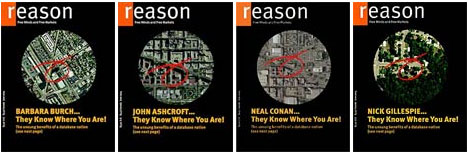
“This represents an unprecedented experiment in hiper-individualizing a commercial print publication”
Nick Gillespie, Editor-in-Chief of Reason, in the June 2004 issue
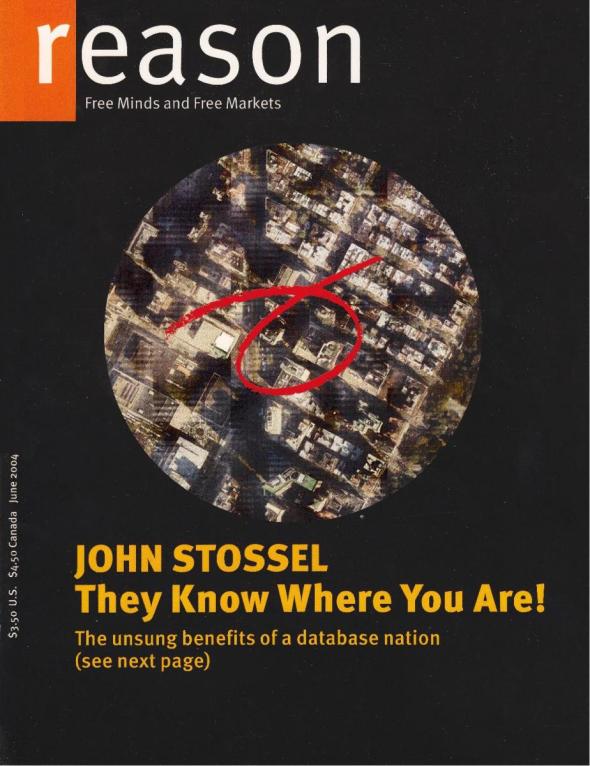
Monthly libertarian magazine Reason pulled off the ultimate in customized publishing when its 40.000 subscribers received their June 2004 copy with a satellite photo of their own neighbourhood on the cover and their house circled in red. On the back cover readers found adverts customized to them and their neighbourhood. The stunt accompanied the magazine’s cover article about the power and importance of databases to customize information.
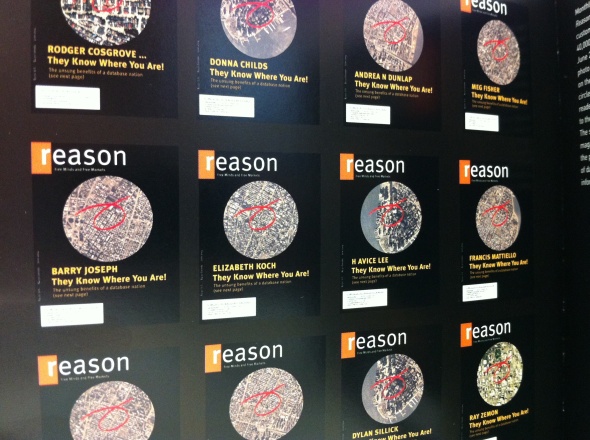
When the 40,000 subscribers to Reason, the monthly libertarian magazine, receive a copy of the June issue, they will see on the cover a satellite photo of a neighborhood – their own neighborhood. And their house will be graphically circled.
On one level, the project, sort of the ultimate in customized publishing, is unsurprising: of course a magazine knows where its subscribers live. But it is still a remarkable demonstration of the growing number of ways databases can be harnessed. Apart from the cover image, several advertisements are customized to reflect the recipient’s particulars.
Nick Gillespie, editor in chief of Reason, said the magazine, with an editorial mission of “Free Minds, Free Markets,” used the stunt to illustrate the cover article about the power and importance of databases.
“Our story is man bites dog,” Mr. Gillespie said. “Everybody, including our magazine, has been harping on the erosion of privacy and the fears of a database nation. It is a totally legit fear. But they make our lives unbelievably easier as well, in terms of commercial transactions, credit, you name it.”
Rodger Cosgrove, president of Entremedia, a direct marketing firm and a member of Reason’s board, assisted in coming up with a program that allows the subscriber list to be integrated with satellite photographs. He also worked with Xeikon, the manufacturer of the printer that made the endless customization possible.
“They were interested in showing what this technology could do,” he said, “and we were interested in demonstrating the power of databases to customize information.”
The cover article, written by Declan McCullagh, suggests that while databases can lead to breaches in privacy, it allows Dell to provide instant credit to computer buyers, grocery stores to stock goods that their customers want, and mortgage lenders to keep their rates down.
“It’s obvious that databases provide enormous benefits to modern life,” said Marc Rotenberg, president of the Electronic Privacy Information Center. “We could no more operate without computer databases than we could without electricity.”
“That doesn’t mean that there aren’t still some serious debates to have about government databases,” he added, “including the monitoring of the general American public under John Poindexter’s Total Information Awareness program and the passenger profiling that has gone on.”
In some respects, Reason’s cover stunt is less Big Brother than one more demonstration that micromarketing is here to stay. “My son gets sports catalogs where his name is imprinted on the jerseys that are on the cover,” Mr. Rotenberg said. “He thinks that’s very cool.”
In his editor’s note describing the magazine’s database package, Mr. Gillispie left open three spots – commuting time, educational attainment and percentage of children living with grandparents – so he could adapt his message to individual readers. Mr. Gillespie said that the parlor trick could have profound implications as database and printing capabilities grow.
“What if you received a magazine that only had stories and ads that you were interested in and pertained to you?” he asked. “That would be a magazine that everyone would want to read.”
Agency: Entremedia, USA
Year: 2004
Welcome to ROACHVILLE from TBWA Johannesburg
Posted: February 8, 2013 Filed under: Ambient, Case History, Guerilla, Installation, Press/Outdoor, South Africa | Tags: Adam Livesey, Ambient, Case History, cockroaches, doom fogger, funny, installation, Matthew Bring, TBWA, TBWA/Hunt/Lascaris, welcome to roachville Leave a comment


TBWA Hunt Lascaris Johannesburg’s brief was to conceptualise an outdoor campaign that illustrates that Doom Fogger gets into every nook and cranny, killing insects before they get too comfortable. Using cracks on outdoor walls, they created a make-believe world, showing cockroaches in different environments. This was achieved by creating miniature furniture and using actual cockroaches to depict real life scenarios inside the cracks.
Advertising Agency: TBWA, South Africa
Executive Creative Directors: Matthew Bring, Adam Livesey
Creative Director: Justin Wright
Art Director: Sifiso Nkabinde
Copywriter: Thokozani Mashigo
Agency Producer: Sharon Cvetkovski
Account Manager: Vanessa Maselwa.
Production: Birthmark
Director of photography: Rowan Cloete
Producer: Matthew Durant
Year: 2012

 This is not ADVERTISING