Samsung eMotion Project/Leo Burnett Italy
Posted: April 24, 2015 Filed under: Digital, Direct, Italy, TV/Film, Viral | Tags: eMotion Project, Leo Burnett, samsung, Samsung Gear VR Leave a comment
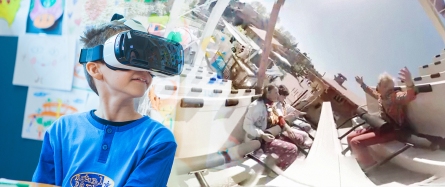
The aim of eMotion Project is to help hospitalized children to face recovery in a whole new way, bringing the light-heartedness typical of childhood back into their lives.
With the collaboration of Samsung Italia, the potential of Samsung Gear VR has been put at the disposal of the pediatric department of Santa Maria Goretti hospital in Latina, to offer little patients an unforgettable visit to “Movieland”, near Lake Garda.
The experience proved to be a valuable way of providing genuine emotional support, turning around not only the mood of the little patients, but also their whole approach to recovery.

Learn more about Samsung Gear VR at http://spr.ly/_GearVR
#eMotionProejct
Agency: Leo Burnett
Executive Creative Director: Francesco Bozza, Alessandro Antonini
Creative Director: Christopher Jones
Copywriter: Nicoletta Zanterino
Art Director: Alessandro Polia
Creative team: Alice Jasmine Crippa, Federica Rebuzzini
Social Media Manager: Raffaella Ramondetti
Project Manager: Andrea Castiglioni
Managing Director: Niccolò Arletti
Account Director: Viktoria Ovtcharenko
Account Manager: Federica Giacomotti
Producer: Isabella Guazzone
Regista: Claudio Gallinella
Casa di produzione: Bedeschi Film
Handbuilt by Robots – Collett Dickenson Pearce for Fiat Strada (1979)
Posted: October 16, 2014 Filed under: Best Use of Television, Car, Event, Legendary, TV/Film, UK, Vintage | Tags: Car, Collett Dickenson Pearce, FIAT, Figaro, Handbuilt by robots, Hugh Hudson, Paul Weiland, The Strada Leave a comment
“A visual feast. For the audience in 1979 this was as close to sci-fi as you could get. It was like watching two minutes of the Star Wars movie – no one had seen anything like it before. The ad also makes it seem like lots of care has gone into building the cars.”
One evening in 1979, television viewers who hadn’t gone to the loo in the middle of News at Ten saw something very unusual, a commercial break completely taken up by one ad. It was a two-minute triumph showing a car being put together in a factory, and not a dirty blue overall in sight. The original idea for an ad to promote the new italian car was to use smoke coming out of the Vatican as a sign that a new car had been born. But at the drawing board, writer Paul Weiland remembered an item he had seen on the tv show Tomorrow’s World about the Fiat factory in Italy where cars were put together by robots. He tracked the footage down and decided it could form the basis of the new Fiat campaign. “In Europe the car was called the Ritmo, so I thought… what kind of music can I put with this?” recalls Weiland. “My knowledge of classical music was zilch but I remembered something called Figaro and thought: Figaro sounds like Ritmo! I put this music to it and everyone thought it was great…” If that part was easy, the filming of the commercial turned out to be a nightmare.
Ironically, when the production team led by the director Hugh Hudson arrived at the Fiat factory in Turin to shoot the film they had to run a gauntlet of pickets and burning tyres lit by workers protesting about robots taking their jobs. “When we arrived there, there was a strike, and we got locked in to the factory” recalls director Hugh Hudson. “We were locked in nobody operating, just someone to press the button. All the workers were out but we were in making the film…” “The commercial was quite expensive at that time, around 300.000 pounds” add Paul Weiland, “but they probably lost about seven million in production, because every two seconds we were having to stop the machines!”
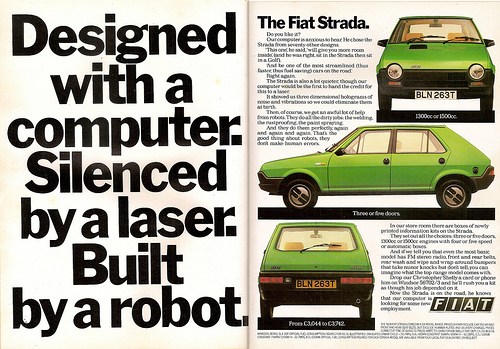
The finished ad had no voice over and ended on a simple caption “Handbuilt by Robots”. Many ad makers believe its intelligent combination of music and camerawork make it one of the best TV commercials ever shown in UK.
Advertising Agency: Collett Dickenson Pearce
Copywriter: Paul Weiland
Art Director: Dave Horry
Director: Hugh Hudson
Production company: Hudson Films
Samsung Maestros Academy – The Future of Made in Italy with Samsung and Leo Burnett
Posted: May 26, 2014 Filed under: Ambient, Case History, Design, Digital, Event, Installation, Italy | Tags: Leo Burnett, Made in Italy, Milan, samsung, Samsung Maestros Academy, Smart Bike Leave a commentItalian craftsmanship has long been considered a renowned art form. Now, in a time when younger generations are gravitating to smartphones rather than toolboxes, expertise is only reminiscent of a bygone era. With the help of Leo Burnett Milan, Samsung created the first-ever digital conservatory called Maestros Academy to foster the next generation of Italian artisans in order to preserve “Made In Italy” excellences.
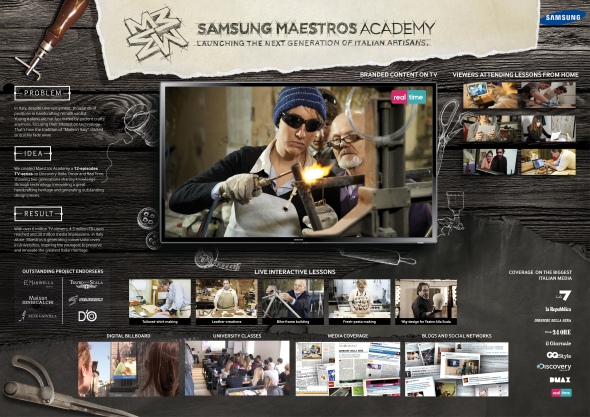
To bring to life the Samsung strategic role of “enabler” in people’s life, we looked at the current social situation in Italy: the disappearance of great handcrafting excellences which once brought Italy to greatness. At the same time, unemployment rate among young people is dramatically growing and younger generations are yearning for new opportunities to discover and express their potential and talent. Our idea aims to deal with this Italian paradox, reconnecting two generations, preserving the future of “Made in Italy” and fostering a new generation of Italian artisans. We want to demonstrate the great results that people and technology can achieve together.
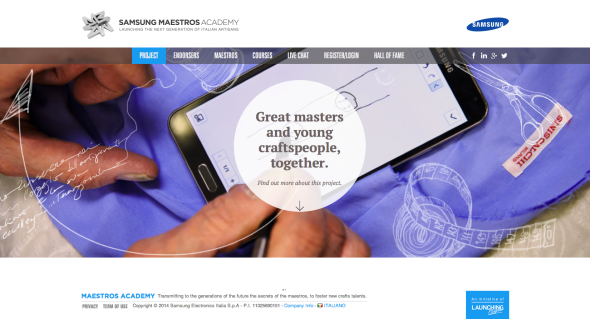
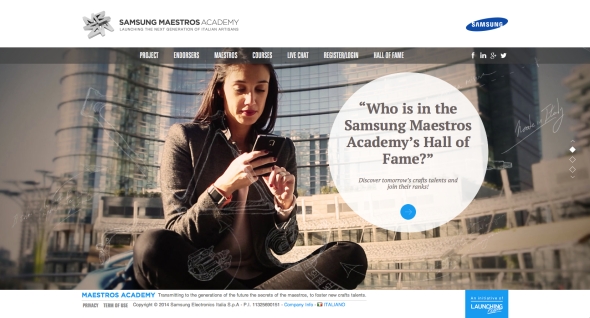
For this reason we created Samsung Maestros Academy: the first digital and integrated platform where young talents can learn the secrets of “Made in Italy” masters, through every kind of smart-device, inspiring the youngest to preserve and innovate the greatest Italian heritage.
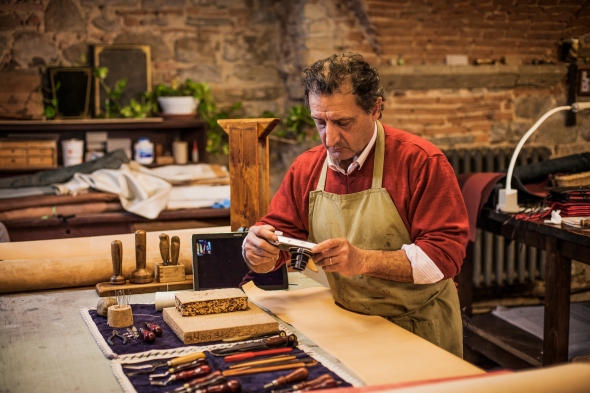
The idea of Samsung Maestros Academy was spread on digital channels (FB, Italian newspapers’ and lifestyle magazines websites, Confartigianato’s channels, LinkedIn, Twitter) to join the primary target of the initiative, digital natives, and drive them to the main platform, accessible from every consumer’s electronic device, such as smartphone, tablets, laptops and Smart-TV. The engagement platform consist in more than 40 video-lessons, full of invaluable ancient secrets, in-depth materials and live-interactive lessons, featured even on outdoor and digital-billboards in the major Italian squares, such as Duomo Square in Milan. A technology-enabled connection between two generations, that inspired Discovery Italia channels to produce a 12 episodes TV-series, telling our students’ best success, spread even thanks to Online and mobile TV channels platforms (Realtime.it, DMax.it, Discovery Italia digital platform). The project gained spontaneous echo on national newspapers, magazine and Tv-programs (Piazza Pulita) generating conversation even in the major Italian University.
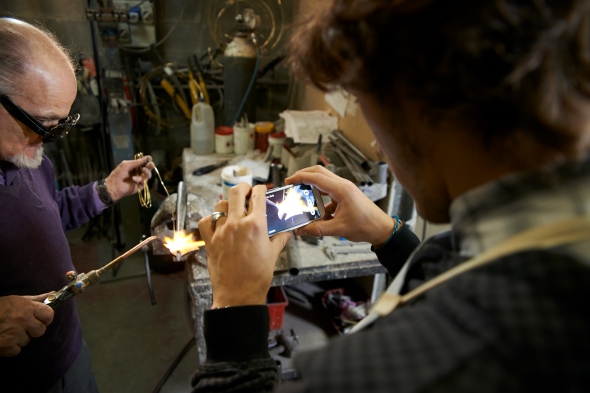
Samsung Maestros Academy generated a great conversation on newspapers, social media and TV-programs, with more than 6 million TV-viewers, 1 million Youtube-views in few days, 4.5 million FB-users reached and 30 million media impressions -in Italy alone- becoming a big topic even in universities including “Università commerciale Luigi Bocconi”, “Università Cattolica del Sacro Cuore” in Milan, IED, “Università degli studi di Roma Tor Vergata” and even by Fashion Institute of Technology in New York.Thanks to an extensive network of touchpoints people learnt ancient crafts through every smart-device,empowering consumer-awareness on product-features and brand reputation.
During interactive-lessons, users asked very specific questions, proving a remarkable high user-engagement. Almost the 50% of live-lessons participants asked the Maestros to become an apprentice, exceeding the available positions by 300% on average. Maestros’ students produced with great success innovative design-items, inspiring even more young talents to preserve and innovate the greatest Italian heritage. After Maestro Pelizzoli’s course, Alice created a truly innovative bike, showcased with great success during the Milan Design Week event. Marina together with Maestro Siniscalchi tailored a shirt, featured on an important Italian newspaper, triggering even the curiosity of GQ. Anna and Valerio crafted a bag, immediately displayed by the prestigious “Flow” shop in Florence.The results achieved by many other students generated over 30 million media-impressions and reaching 4.5 million FB-users, on Italian market alone.

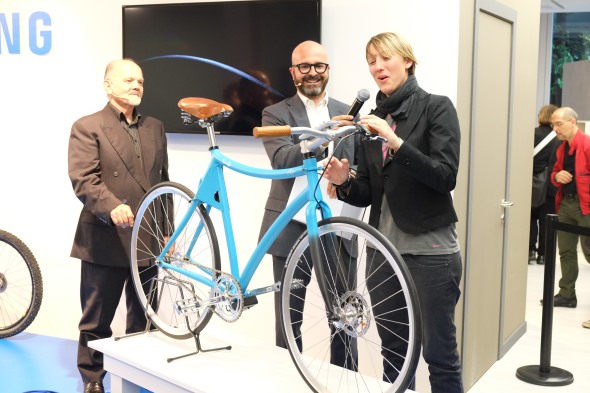
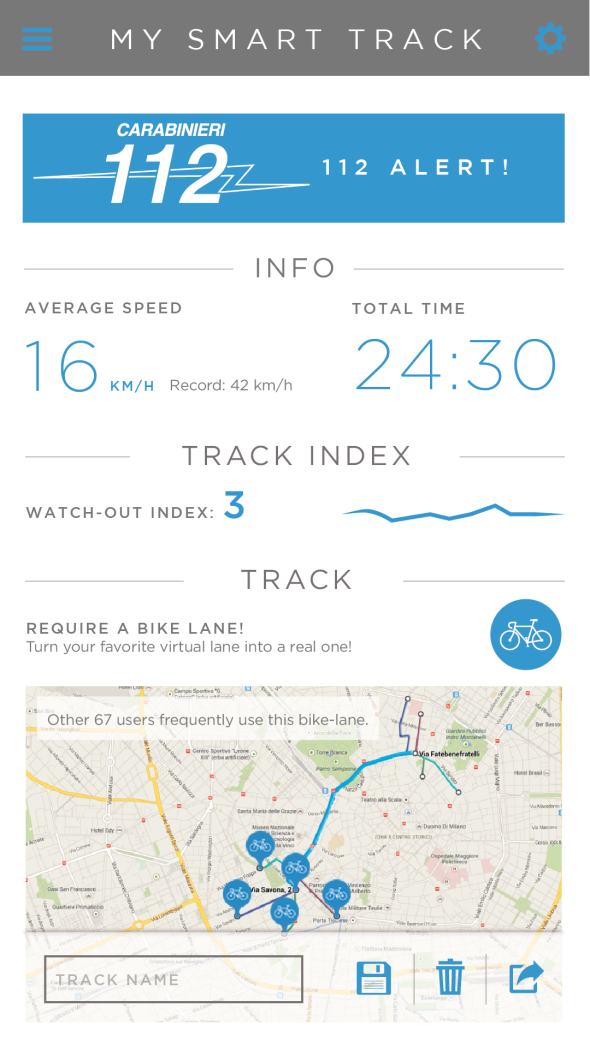
After few months, a student with her Maestro created Samsung Smart-Bike, the first safe-bicycle that protects the rider with its built-in smart-components, automatically activated through a Samsung smartphone. A responsive “safety-environment” that detects ambient-conditions and protects the driver in real-time. A concrete solution for the problem of bikes being the most “unsafe” way of moving in Italy and a real help to break the young people’s barrier with using appropriate safety-equipment.
The idea was to control a fixed-bike and its built-in smart components with a Samsung smartphone and a dedicated app, allowing the automatic control of four laser-beams, a safety-camera a GPS-tracking system, offering innovative safety-features. The first engineered bike and its paired app were presented to one of the greatest design fairs in the world: the Milan Design Week, with the endorsement of EXPO2015 representative of Urban Mobility capturing the interest of important journalists. Alice’s idea has been taken under consideration for applications according to EXPO scenarios, after being recognized as a big step-forward for urban-safety and sustainability.

Advertising Agency: Leo Burnett Italy
Executive Creative Directors: Francesco Bozza, Alessandro Antonini
Creative Director: Christopher Jones, Anna Meneguzzo, Cristiano Tonnarelli
Digital Creative Director: Paolo Boccardi
Copywriter: Alice Jasmine Crippa
Art Director: Alessia Casini, Gianluca Ignazzi
Creative Team: Cristina Bissanti, Felipe Iglesias, Alberto Lot, Lia Paganini
Project Manager: Andrea Castiglioni, Francesco Loprete
Producer: Riccardo Biancorosso, Gaia Fusaro
Art Buyer: Giada Cioffi
PR Coordinator: Maria Teresa Genovese
Managing Director: Niccolo Arletti
Brand Leader: Elena Korzhenevich
Account Supervisor: Luca Ruspini
Account Manager: Federica Giacomotti
Technical Director: Gianluca Mori
Production House: Magnolia
Trident – The Chew Life Campaign
Posted: May 8, 2014 Filed under: Press/Outdoor, TV/Film, USA, Viral | Tags: animal, Johannes Leonardo, mondelez, the chew life, trident Leave a commentIf a whole 60-second commercial consisting of clips of gum being chewed sounds boring, then watch this. For Trident, Johannes Leonardo teamed up with director / photographer Britton Caillouette of Farm League to capture over 60 pieces of content of humans and animals simply chewing, then put them together with an awesome soundtrack (an original track from boutique music collective Ski Team) to make this original spot. It’s all part of a campaign by the brand to make gum “cool” again, as part of a wider strategic project by parent company Mondelez
“When Mondelez noticed that gum sales were down, they wanted to boost the whole category. Because advertising and innovation had made gum clinical and utilitarian, they needed an idea that made chewing cool again. So instead of selling gum, we sold an attitude. Based on the insight that there’s too much talking going on and gum stops you from yapping, we decided to bring Silent back. We did so by documenting what we called The Chew Life, a generation of people who don’t feel the need to talk. Who chew instead. The Chew Life was launched during the SuperBowl 2014 (in Nashville).”




Leo Burnett Italy for WWF: Pets4Pets Project – Advertising thought by kids to get adults thinking
Posted: December 16, 2013 Filed under: Agency, Case History, Digital, Italy, Low Budget, Press/Outdoor, Social, TV/Film | Tags: advertising, advertising thought by kids, bear, Leo Burnett, Pets4Pets Project, TV/Film, WWF Leave a commentWhat about asking youngsters, instead of experienced creative directors, to create the strongest communication campaigns?
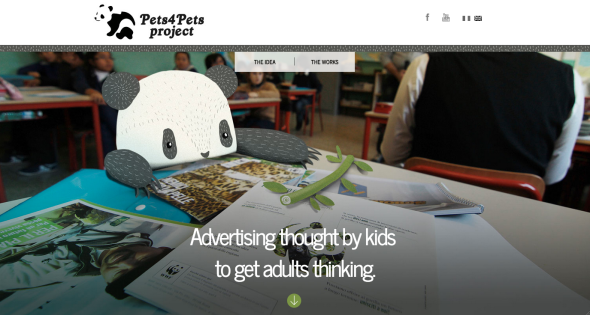
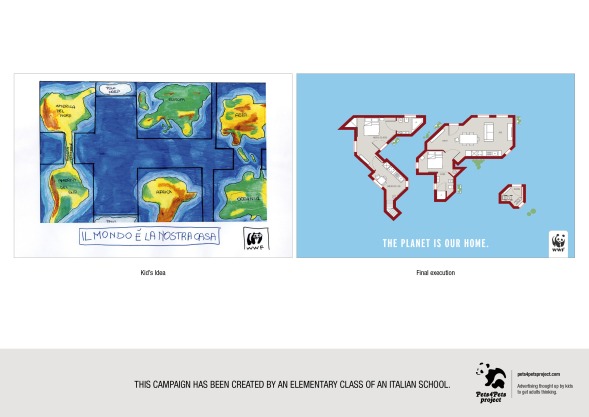
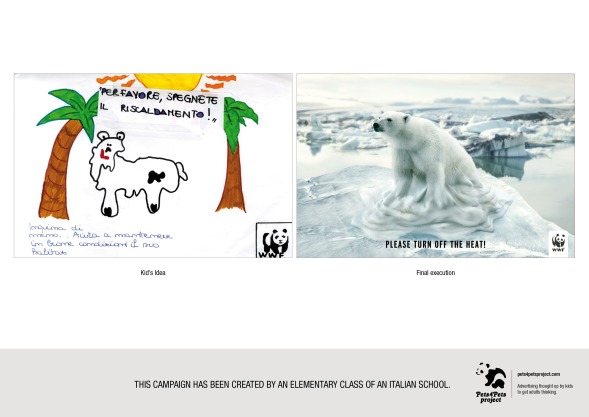
Pets4Pets Project taught little kids the secrets of the advertising industry; inviting them to imagine new social campaigns to help protect the animals they love the most. WWF, together with a team of creatives, photographers, illustrators, film directors, animators, post-producers and speakers helped students at an elementary school experience the whole creative process: from the brief, to the Pre Production Meeting, to the shooting, to going on-air. The result? Well see for yourself in the case video.

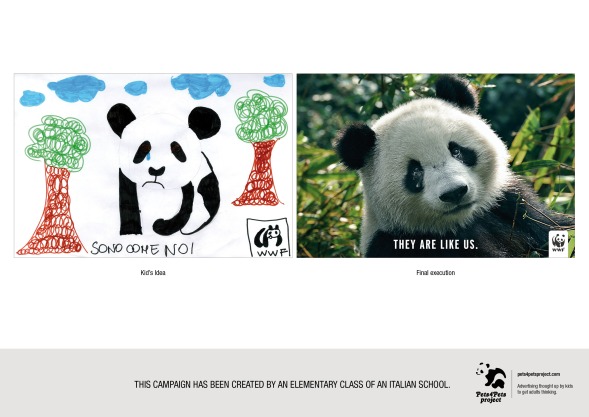
The adventure starts in the classroom, then moves inside the creative agency and finally arrives on a production set. For all the experienced creatives there’s just one strict rule: “never ‘contaminate’ the kids’ ideas”, just offer them the production advice they lack. First Challenge: a print campaign.
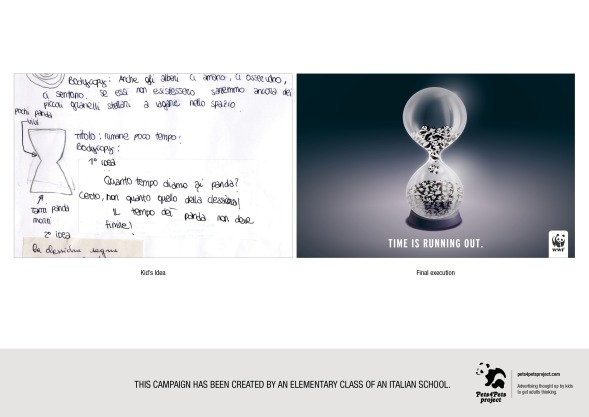

Second Challenge: a TV commercial.
The results
“From the first sketch on a piece of paper, to 2 TV commercials, 4 radio announcements and 8 print campaigns, ready to go on-air”. For every creative piece, you can see the “before” and “after”: from the kids’ original sketches to the final executions ready to go on-air. One thing is immediately evident: the kids’ work is already 100% creatively effective.
The team of professionals just helped them “translate” their ideas into a language that adults can understand.
Advertising Agency: Leo Burnett Italy
Executive Creative Director: Francesco Bozza
Associate Creative Director: Andrea Marzagalli
Creative Team: Andrea Stanich, Sergio Spaccavento, Paolo Boccardi, Alice Crippa, Serena Micieli, Silvia Savoia
Executive Producer: Debora Magnavacca
Year: 2013
The Bent Bullet: JFK and the Mutant Cospiracy
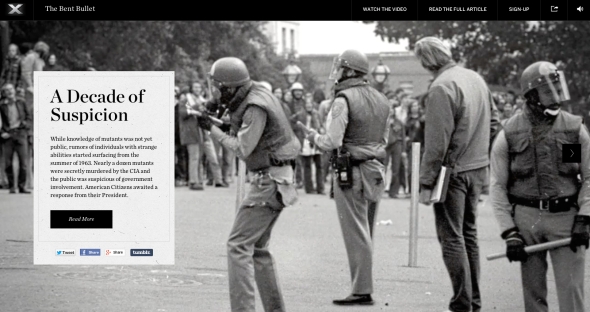
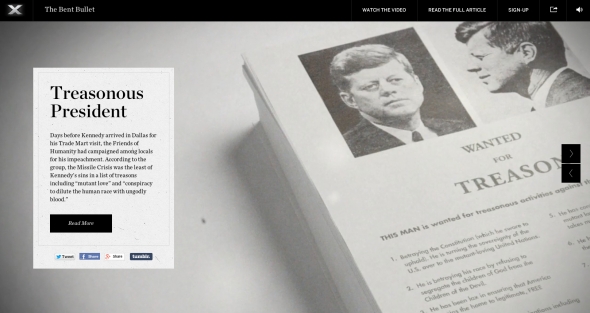
Posted: December 10, 2013 Filed under: Digital, Promotion, Social, USA, Viral | Tags: 1963, days of future, JFK, Magneto, nov. 22, the bent bullet, Viral, x-men Leave a commentMarvel has created a site called The Bent Bullet, a promotional website and video that weaves X-Men mutants in with a JFK conspiracy theory, blending the real and fictional in a quasi sort of alternative history genre getup.


A new viral site promoting the upcoming X-Men: Days of Future Past has hit the web: The Bent Bullet, which explores President John F. Kennedy’s assassination — with an unfamiliar twist.
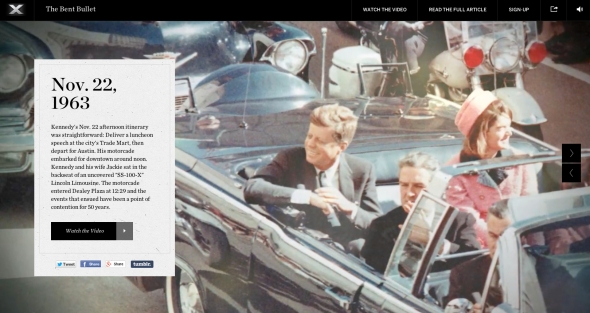
According to The Bent Bullet site, which went up last night, Kennedy was assassinated by Lee Harvey Oswald — with the help of Magneto (played in his young incarnation by Michael Fassbender in the movie), who allegedly used his powers on Oswald’s wild shots to ensure the president’s death. This, it seems, will be the incident that splits the X-Men timeline, triggering the dystopian Days of Future Pastuniverse, in which mutants have been rounded up in internment camps and systematically exterminated with the aid of robotic Sentinels.
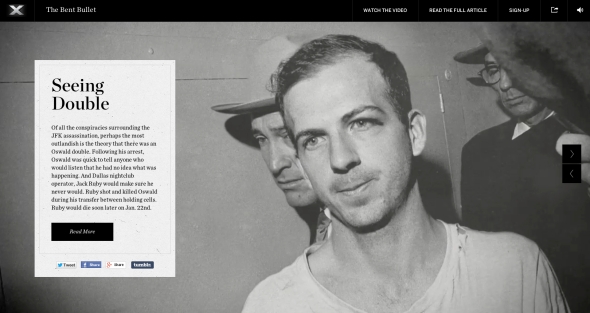
But has Magneto been falsely accused? Fictional journalist Harper Simmons seems to think so — and both Magneto’s own testimony and circumstantial evidence point to Mystique (Jennifer Lawrence) committing the assassination while disguised as Oswald, then slipping away and leaving the real Oswald to take the blame. However, it’s unclear whether she did so on Magneto’s orders, or acted autonomously following a schism in the Brotherhood of Mutants.
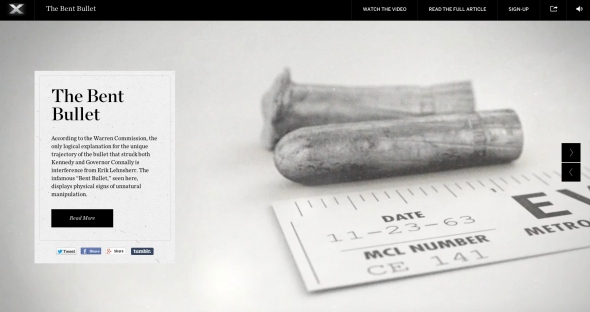
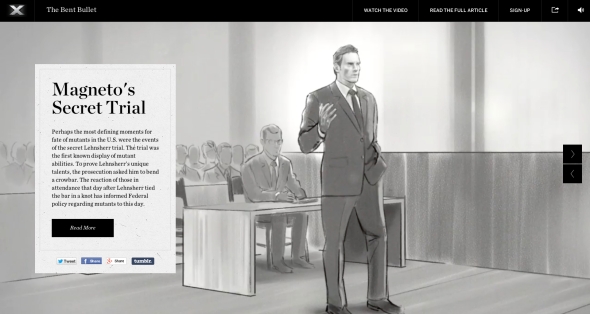
Like the rest of what we’ve seen of Days of Future Past, the movie’s take on the trigger event is based very directly on the comic, with some major modifications. In the original story, the assassin was Mystique, leading an autonomous brotherhood — but her targets were Charles Xavier, Moira McTaggart, and hardline anti-mutant senator Robert Kelly, whose cinematic counterpart died in 2000′sX-Men and was later impersonated by Mystique.
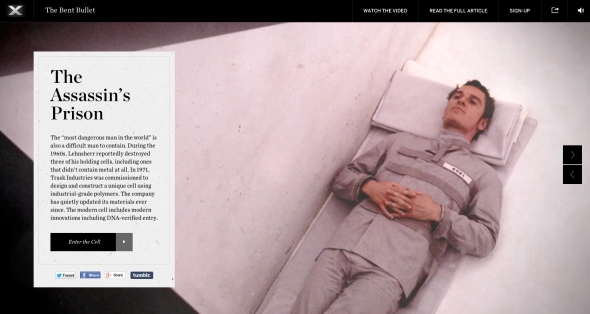
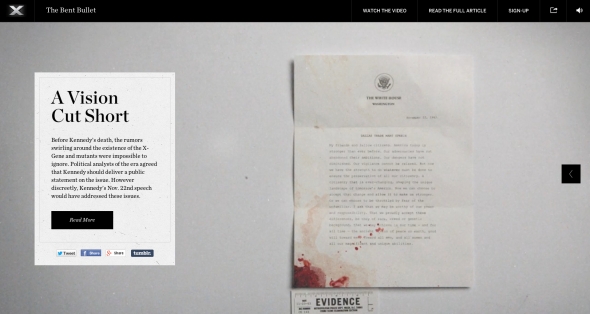
To find out just how closely the rest of Days of Future Past adheres to the comic, will have to wait until flick hits theaters May 23, 2014 — or they’ll have to hope more of these teaser sites are on the way.
Jung von Matt for Pro Infirmis – Who is perfect, anyway?
Posted: December 6, 2013 Filed under: Ambient, Event, Installation, Switzerland, Testimonial | Tags: Alain Gsponer, Alex Oberholzer, Ambient, Because who is perfect?, disabled people, installation, Jung von Matt, mannequin, Pro Infirmis 1 Comment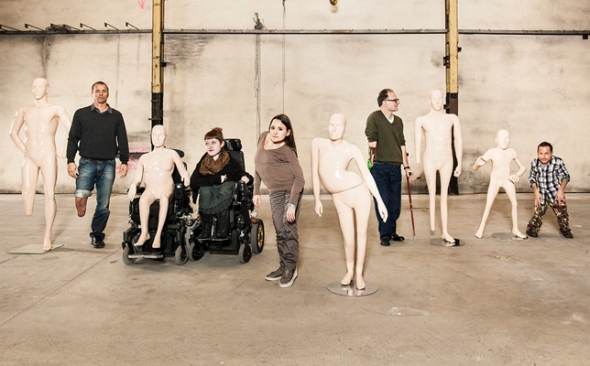
A Swiss charity has created mannequins based on the bodies of disabled people in a bid to raise awareness that no one has a perfect body. Pro Infirmis, an organisation for people with disabilities, worked with people suffering from scoliosis (a curved spine), shortened limbs and a woman in a wheelchair. Each had a mannequin made to perfectly reflect their body shape – which, to their delight, was then displayed in a high street store in Zurich’s main shopping street.


The project was devised to mark the International Day of Persons with Disabilities this week. Called ‘Because who is perfect? Get closer’, the story is captured in a moving four-minute film directed by Alain Gsponer. The film follows four volunteers who enter a warehouse with trepidation. The models are radio host and film critic Alex Oberholzer, Miss Handicap 2010 Jasmine Rechsteiner, athlete Urs Kolly, actor Erwin Aljukić and blogger Nadja Schmid. The film captures the emotional moment each person sees their unique sculpture – and reveals the internal struggle some of those involved have accepting their appearance. Viewers then see the mannequins carefully dressed and placed in the front window in a shop on Bahnhofstrasse, Zurich’s main downtown street. Dave Thomas Junior contributed the music for the new work. The piece Lost at Sea was newly arranged specially for the Pro Infirmis film.
One model said: “Seeing it there for real is quite a shock. This, says the charity Pro Infirmis, is the point of the campaign. It hopes to raise awareness of people with disabilities, specifically in the image-obsessed worlds of fashion and retail. Upon seeing her mannequin, one woman declares: ‘It’s special to see yourself like this, when you usually can’t look at yourself in the mirror”.


Advertising Agency: Jung von Matt/Limmat, Zurich, Switzerland
Executive Creative Director: Alexander Jaggy
Art Director: Daniel Serrano
Copywriter: Samuel Wicki, Mateo Sacchetti
Graphic Designer: Lukas Frischknecht
Year: 2013
100 (from 0 to 100 years in 150 seconds) – A documentary by Jeroen Wolf
Posted: November 27, 2013 Filed under: Art, Viral | Tags: 100, age, Amsterdam, documentary, from o to 100 years in 150 seconds, Jeroen Wolf, people, Viral Leave a comment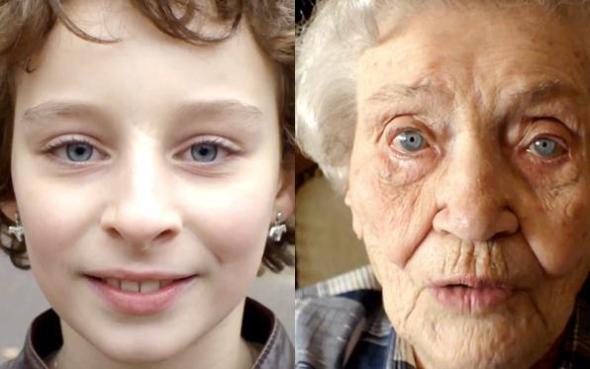
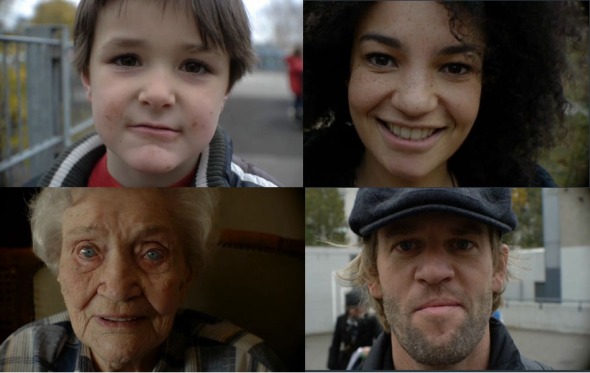
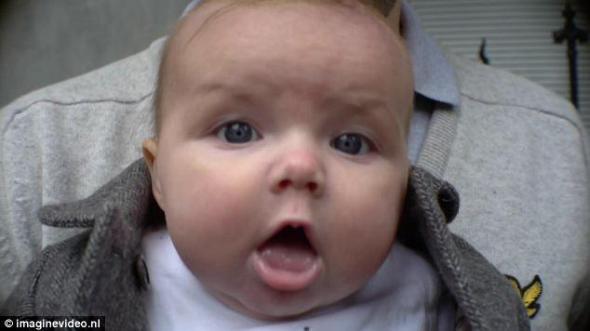
Using a Panasonic GH2, Dutch filmmaker Jeroen Wolf captured people ranging from 1 year young to 100 years old. It’s simple—the person stares at the camera at states their age—yet incredibly touching to see the growth and experience you earn as the years add up.
Wolf actually started the project last October by documenting people in Amsterdam but the project petered out because it was difficult to find very young and very old subjects. Wolf says:
“I found my very old ‘models’ in care homes and it was a privilege to document these—often vulnerable—people for this project. I had particular problems finding a 99 year-old. (Apparently 100 year-olds enjoy notoriety, but a 99 year-old is a rare species…) And when I finally did find one, she refused to state her age. She simply denied being 99 years old! But finally, some 4 months after I recorded my first ‘age’, I was able to capture the ‘missing link’ and conclude this project. “
British Airways – Plane Detecting Billboards
Posted: November 21, 2013 Filed under: Ambient, Digital, Installation, UK | Tags: Ambient, British Airways, France, installation, Outdoor, plane, Plane Detecting Billboards 2 Comments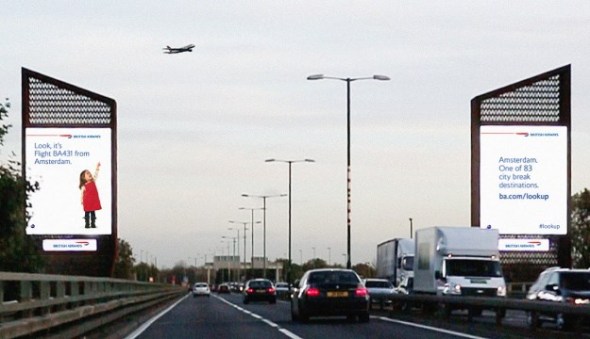
British Airways has unveiled digital billboards which will ‘interact’ with aircrafts flying overhead, as the brand looks to remind customers how magical flying can be, from the perspective of children. Developed by Ogilvy 12th Floor, the ads use custom built surveillance technology which tracks the aircraft and interrupts the digital display just as it passes over the site, revealing the image of a child pointing at the plane overhead accompanied by its flight number and destination it’s arriving from. This will be accompanied by a relevant message to the flight, such as ‘Fly the new A380 to Los Angeles. ba.com/lookup’, or details such as the lowest fare available or the temperature at the destination.
Abigail Comber, British Airways’ head of marketing, said: “This is a first, not just for British Airways but for UK advertising. We all know from conversations with friends and family that we wonder where the planes are going and dream of an amazing holiday or warm destination. The clever technology allows this advert to engage people there and then and answer that question for them. We hope it will create a real ‘wow’ and people will be reminded how amazing flying is and how accessible the world can be.”
The destinations can also be updated immediately depending on changing focus routes for the airline. The ads are part of the airlines’ “Magic of Flying” campaign, which aims to remind people of how magical flying can be, especially from the eyes of a child. The “interactive” billboards are located in London’s Piccadilly Circus and Chiswick.

 This is not ADVERTISING